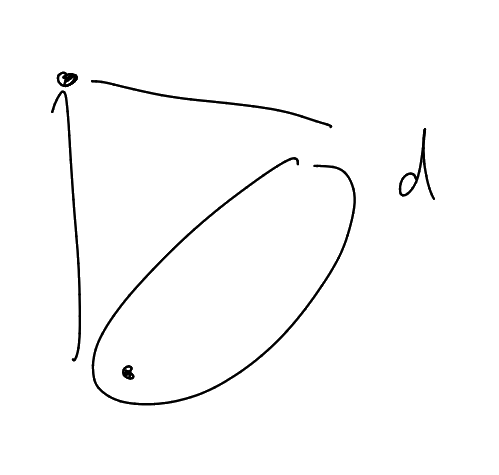
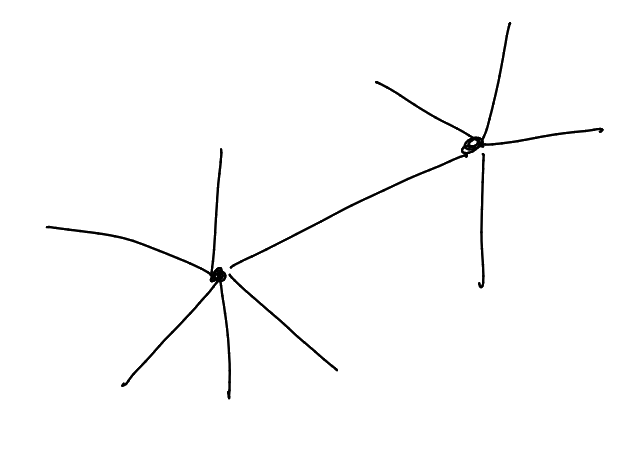
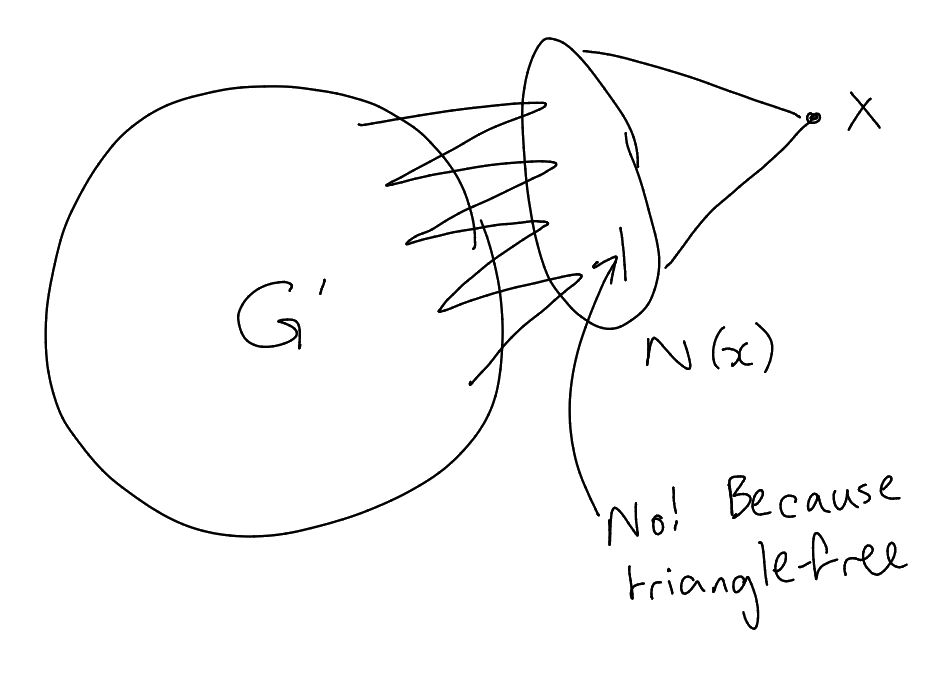
Heuristic: Let’s say we build an independent set
Let’s consider the largest
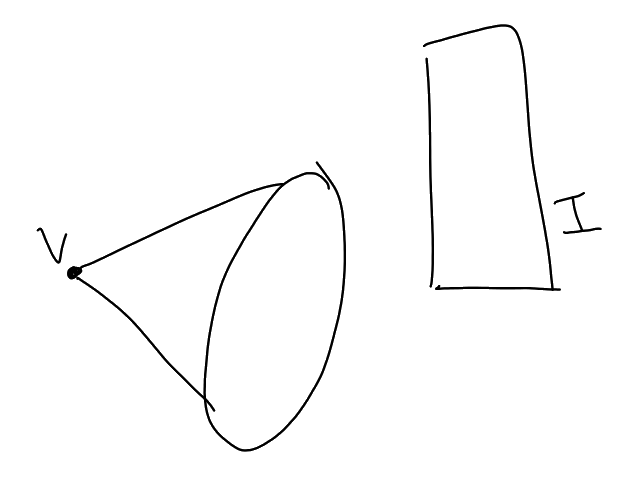
We might expect
|
|
Note that
|
|
Remark.
Given
Theorem 5.2 beats this simple argument by a factor of
Remark.
If we take
|
|
So Theorem 5.2 is in some sense sharp.
In fact, understanding what happens between these
Sketch pad:
Heuristic: Let’s say we build an independent set
Let’s consider the largest
We might expect
|
|
Note that
|
|
Fact (Jensen’s inequality). Let
|
|
Fact. Let
|
|
Proof.
The inequality follows by Jensen. □
Now we will prove Shearer, 1980s (in fact a slight strengthening). We discussed earlier that the proof will involve repeatedly removing vertices and tracking a density increase. Shearer found a very elegant way of tracking this, that makes the proof very clean and magical looking, but the key idea is really the sketch argument given above.
Define
|
|
Note
|
|
by remainder form of Taylor’s theorem.
Proof.
Let
|
|
where
|
|
and
|
|
by triangle-free property.
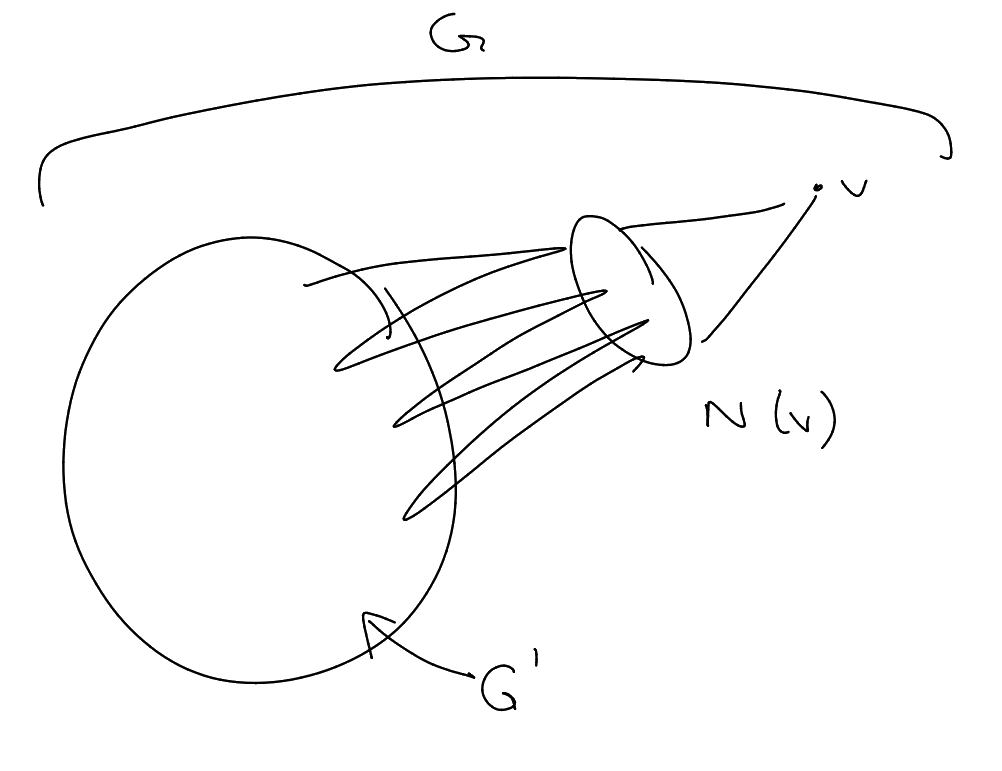
Using the earlier working, we have
We want
|
|
We claim this holds on average. Average of left hand side is
|
|
Average of right hand side is (using
In fact,
|
|
So the inequality holds on average, and thus there exists a good choice of
In this proof, note that this function
We now give another proof of Theorem 5.2, but with some constant
Second proof of Theorem 5.2.
Choose an independent set
|
|
This is an example of what is known as the “hard-core model”. It is called “hard” because we have a hard constraint on every edge (we require that each edge is not present).
Let
|
|
Note, for fixed
|
|
So
|
|
and so enough to show
|
|
for
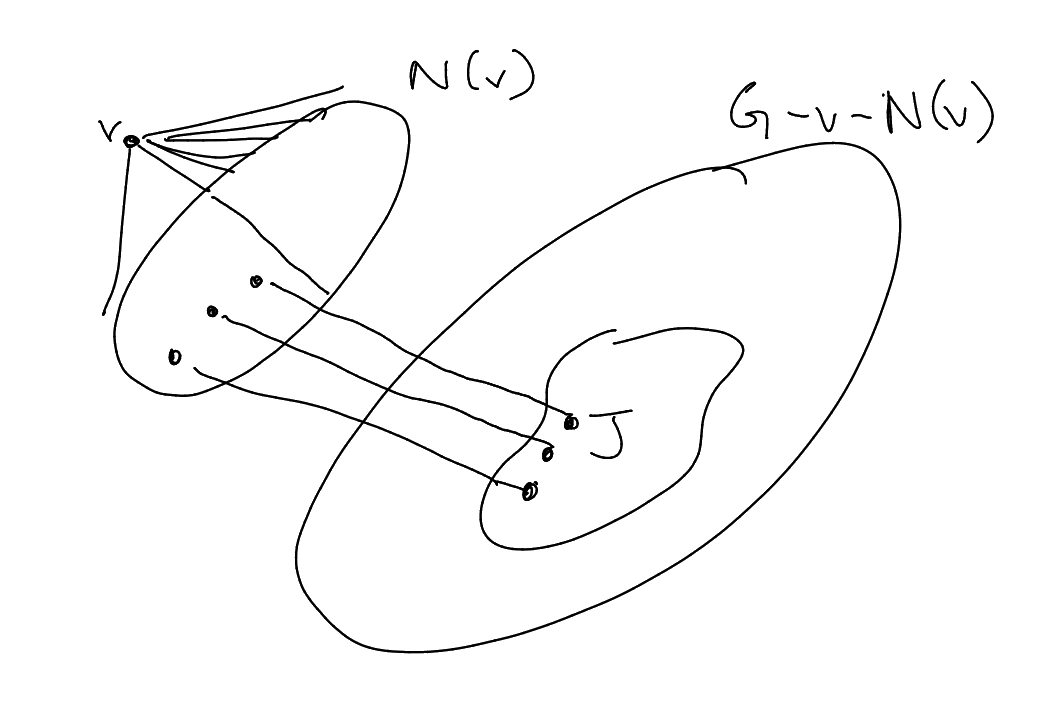
Now fix
|
|
We now bound
|
|
So now fix some
Now observe that
|
|
We are happy with this inequality, because if
Continuing the above calculation, we have
|
|
Now solve
|
|
which is
|
|
and thus
We have shown
|
|
Kim showed
Triangle-free process: Define the random graph process
|
|
Now sample
This method is not what Kim used, but it was used by others later to improve the lower bound.
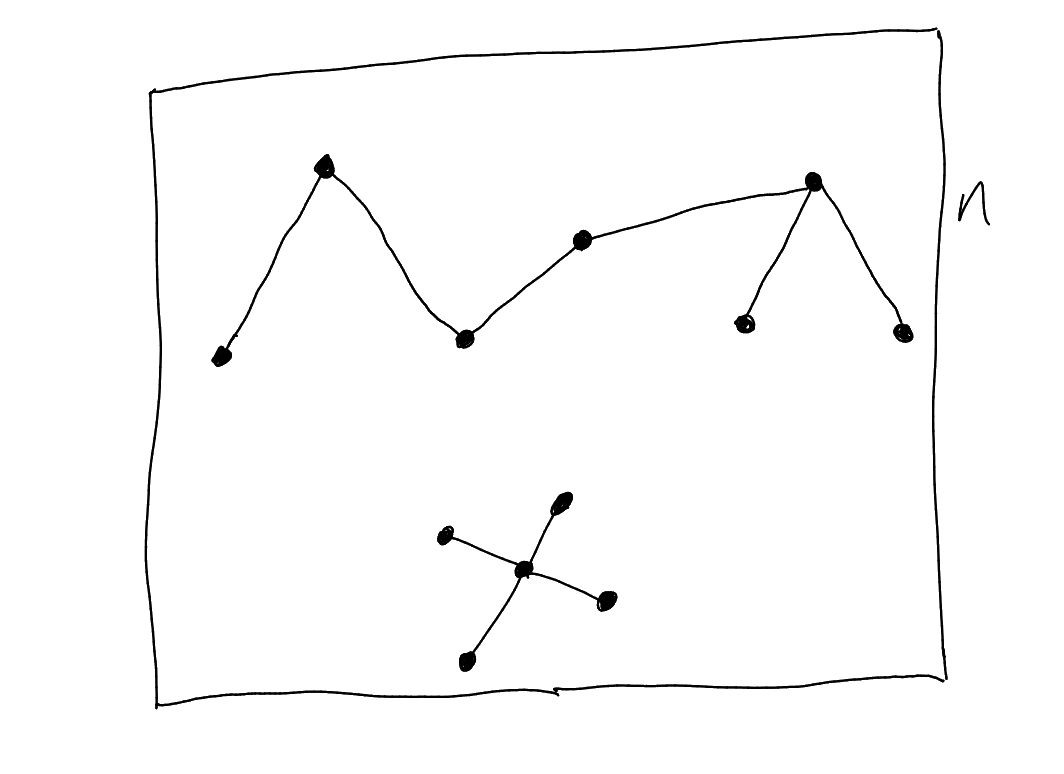
Up until very recently, every proof of lower bound on
Remark. There is some similarity between the triangle-free process and the first proof of Theorem 5.2 that we saw: both are about a process where each step is uniformly random once we condition on a desired property. So we might expect a related theorem to hold for the triangle-free process, and indeed this is the case.
The Ramsey numbers
We now finish this section by using Theorem 5.2 to deduce the upper bound on
Proof.
Let
So apply Shearer, 1980s to get (for large
(where