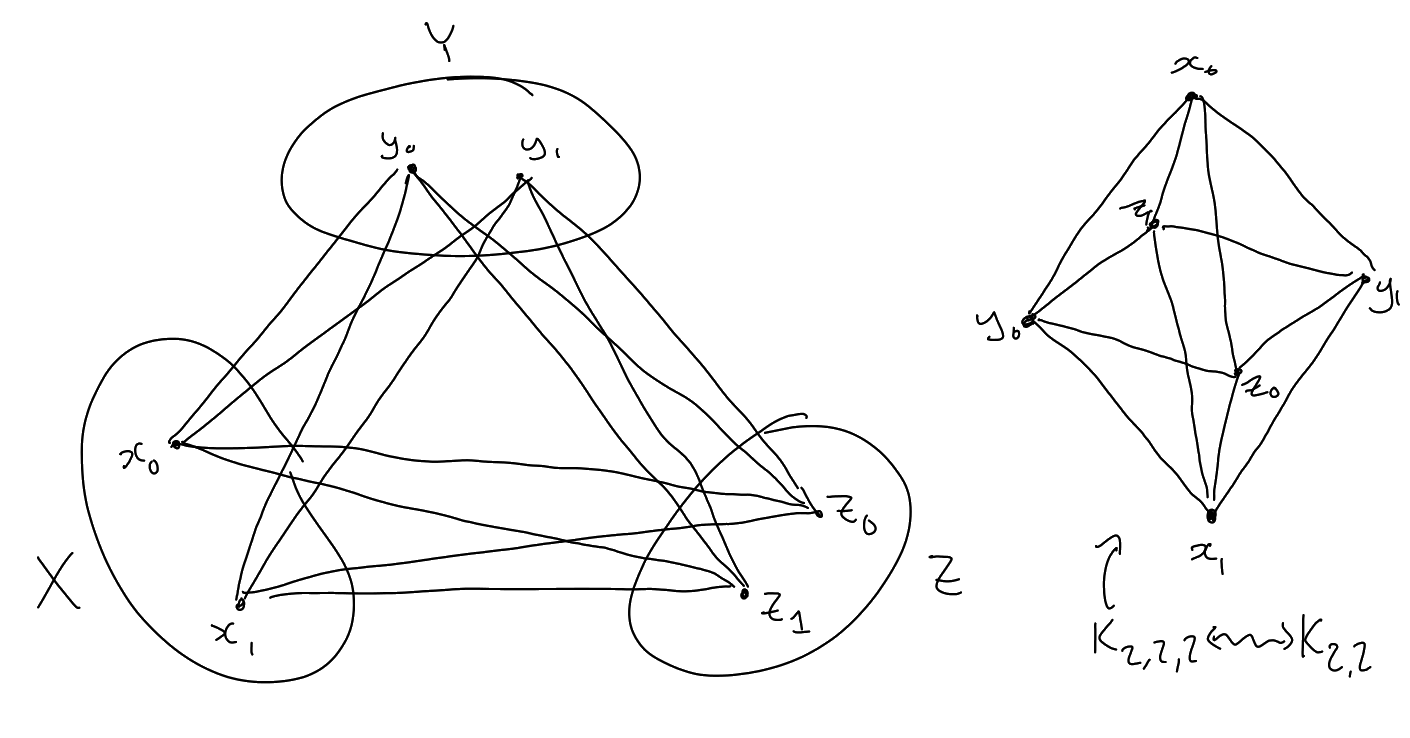
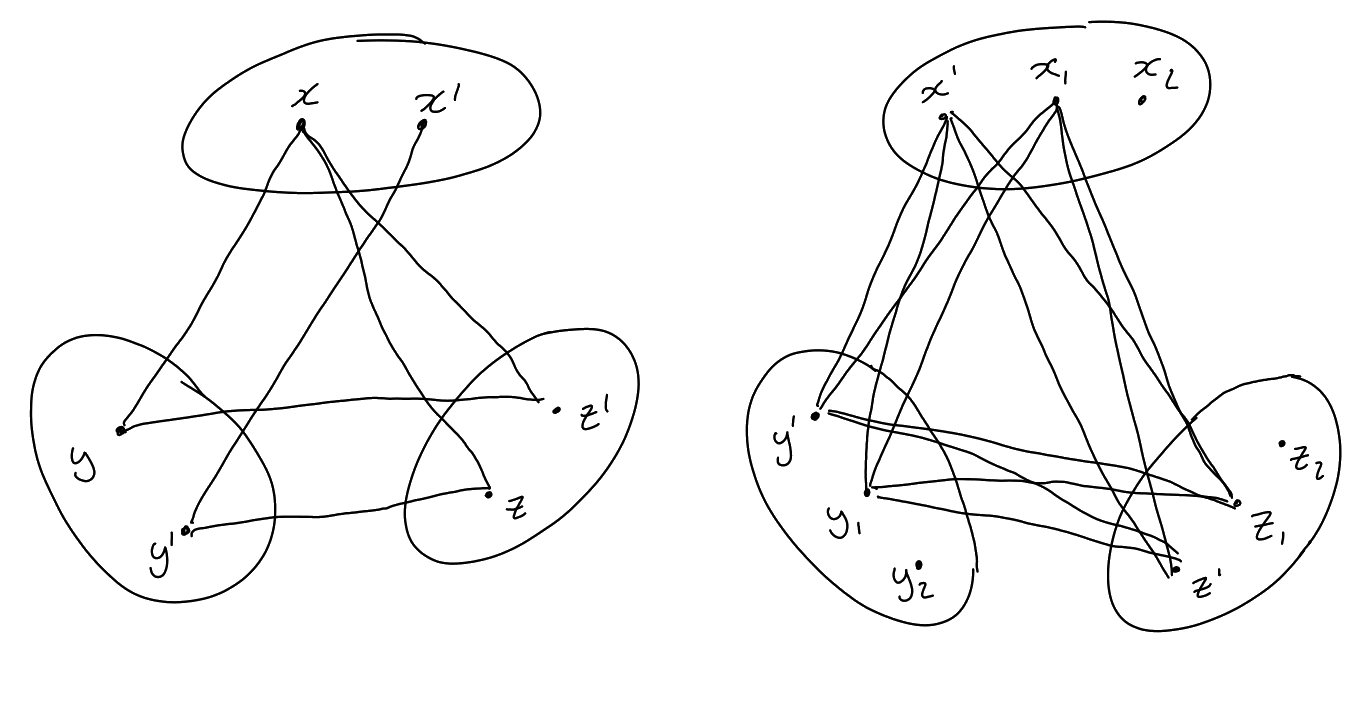
But this notion is too strong to facilitate a regularity lemma.
Note that this proposition is much easier to prove if we use the much stronger notion of quasirandomness that
was introduced at the beginning of this section.
Proof.
So far, we haven’t done anything difficult, but the first tricky step comes now. It will be important that we do not
(immediately) separate
from the rest of the expression, because it will be important that we use the fact that
is only supported
on triangles of .
𝟙𝟙𝟙𝟙𝟙𝟙𝟙𝟙𝟙𝟙𝟙𝟙𝟙𝟙𝟙𝟙𝟙𝟙𝟙𝟙𝟙𝟙𝟙
where
Note that
only depends on the underlying graph, which we assumed was
-quasirandom.
We can compute
|
|
Want to show:
|
|
Claim 2.8.
Suppose .
Then
differs from
by more than
for at most a -proportion
of .
Proof: See Example Sheet 1.
Let .
Call
bad if ,
and good otherwise. Let
|
|
By the claim,
and , and
also ,
.
Hence
But
|
|
so
|
|
Proof.
Let
|
𝟙𝟙𝟙𝟙 |
The hypothesis amounts to
|
|
For each ,
let
|
|
and let
|
|
Then (†) becomes
|
|
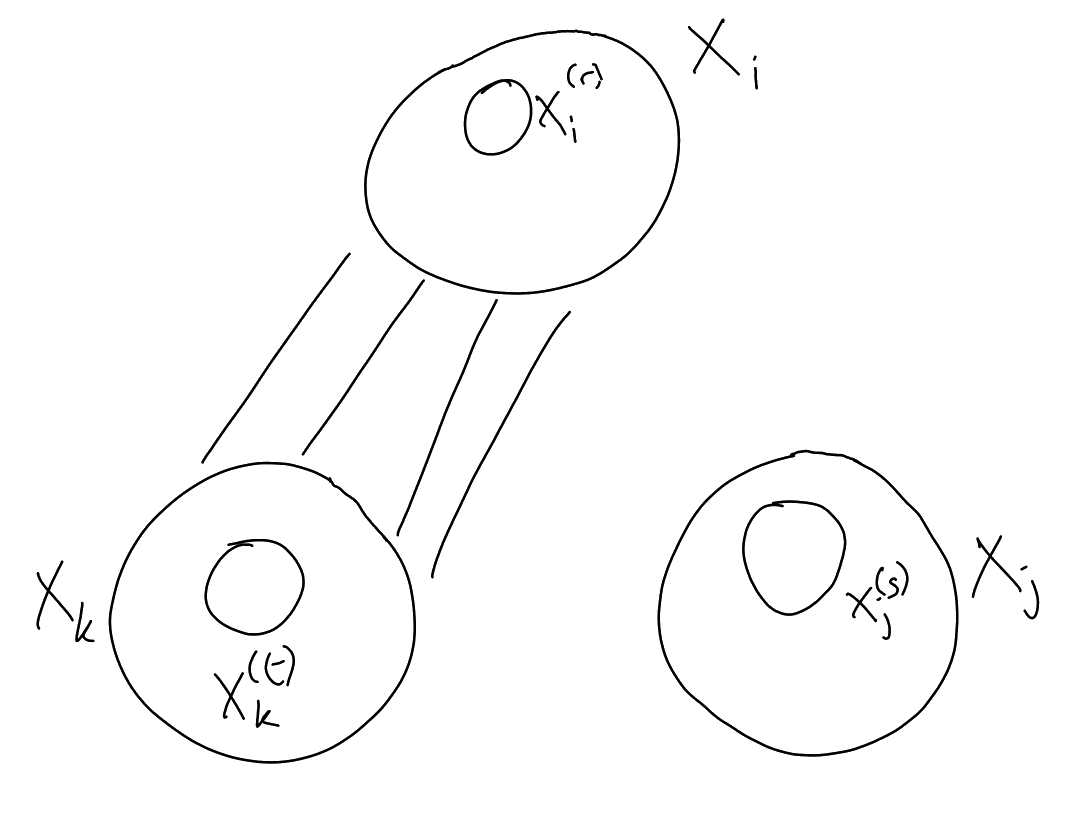
Note that each of the
can be written as a product
|
|
where each of .
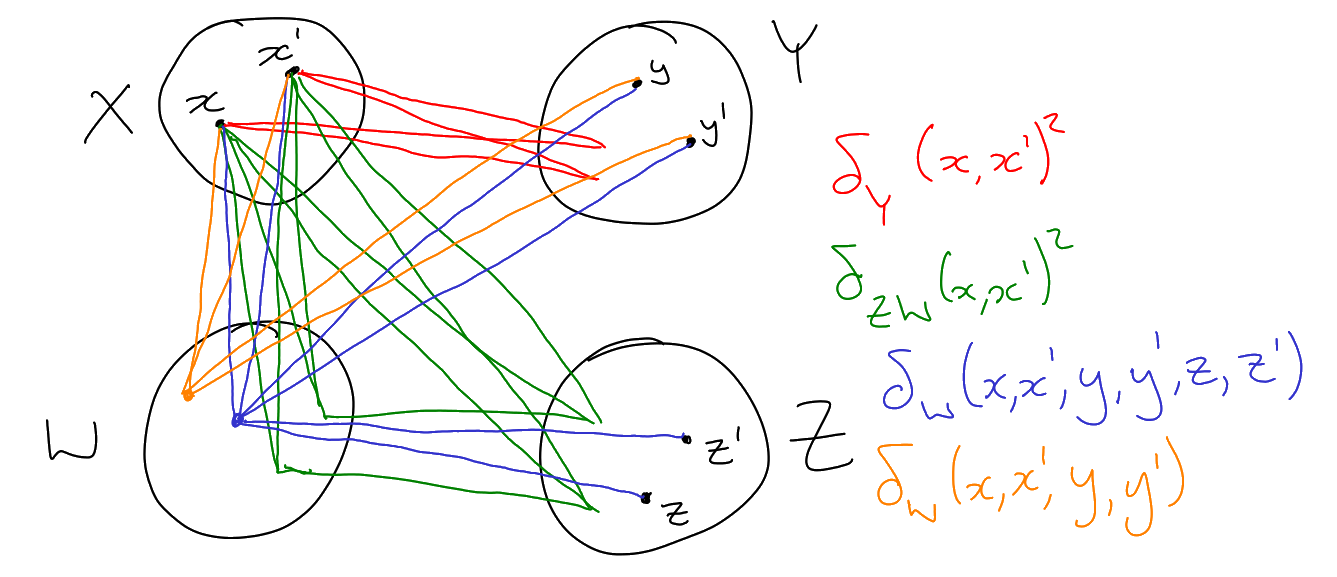
For each and
each pair ,
define ũ
as follows:
Same for .
Finally, let
|
ũṽ |
and observe that the expectation (in the random choices of
ũṽ described
above) of is
. Let
. Since the
expectation of equals
, we can make random
choices so that
(so from now on, “expectation” no longer refers to expectation over the possible random choices of
ũṽ).
Let , choose
at random
from and let
. For each
, the expectation
of is at
least , where
. So the expectation
of is at least
. By Counting Lemma,
and the upper bound on ,
. So the
expectation of
is at least .
Note that
𝟙𝟙𝟙
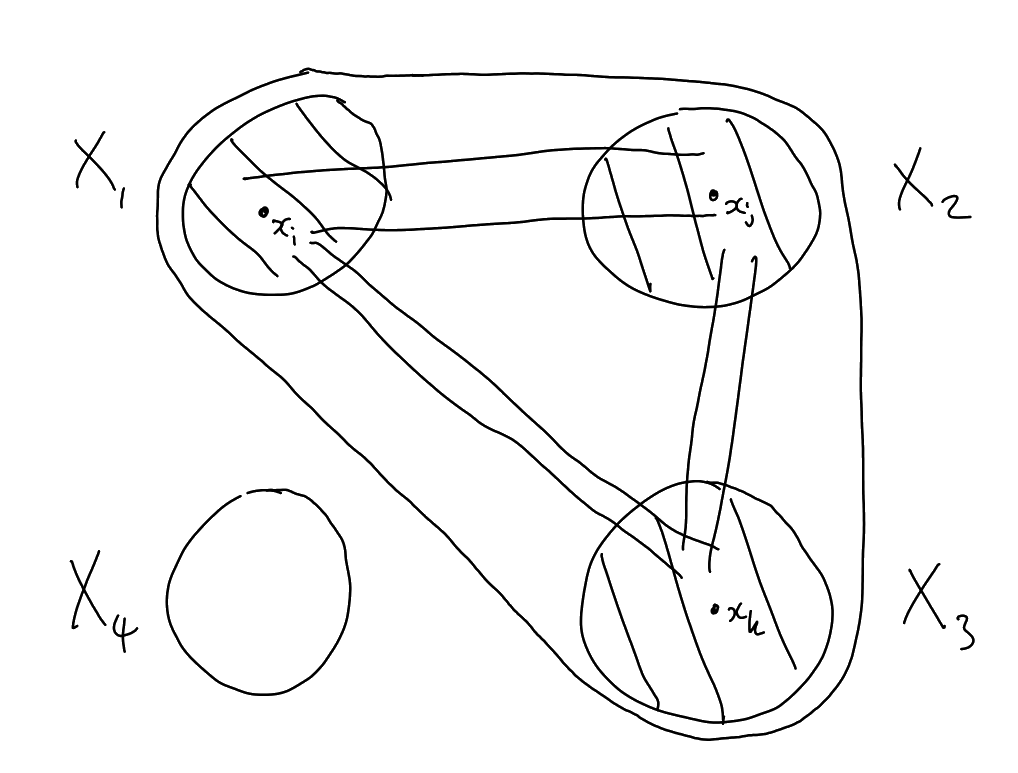
So we are counting a -partite
graph on with
vertices in
each part and
edges between each part.
By a generalisation of Counting Lemma and the upper bound on
,
, since
. By Example Sheet 1 Problem
11, the expectation of
is at most , provided
. Hence the
expectation of is at
least . It follows that
there is a choice of
such that
and . For
such ,
|
|